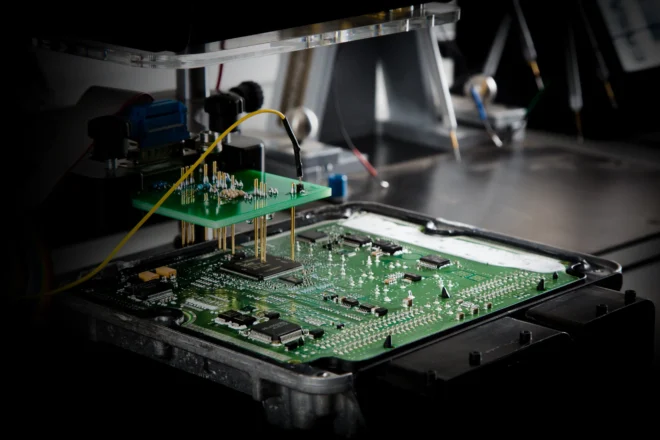


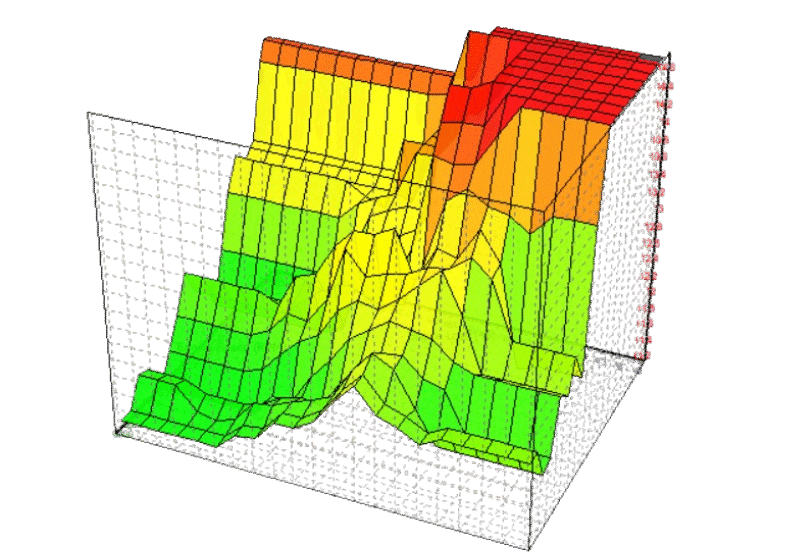
An ECU/ECM remap is the process of modifying the software inside the engine control unit to improve performance, power delivery, drivability, and fuel efficiency. Modern vehicles rely heavily on electronic engine management, and the ECU controls everything from fuel injection to boost pressure and timing. By adjusting this software, you can customize the engine’s behavior to suit performance needs.
How an ECU/ECM Remap Works
Inside every ECU is a set of operating maps that control key engine functions such as:
- Fuel injection timing
- Air–fuel ratio
- Boost pressure (turbo/supercharged engines)
- Ignition timing
- Throttle response
- Torque limits
- EGR / DPF / emissions control strategies (diesel)
- Transmission torque communication (in some vehicles)
A remap changes the values in these tables to optimize how the engine performs.
Tuners read the original ECU file, edit it using professional tuning software, and then write the updated map back into the ECU.
Types of ECU Remaps
1. Stage 1 Remap
A safe, reliable tune that works with a completely stock vehicle.
✔ More horsepower
✔ Better torque
✔ Smoother throttle response
✔ No additional hardware needed
2. Stage 2 Remap
Designed for vehicles with upgraded hardware (intake, exhaust, downpipe, FMIC).
✔ More aggressive power gains
✔ Requires supporting mods
3. Economy Remap
Focused on fuel savings and low-end torque.
Common for work trucks and daily drivers.
4. Diesel DPF/EGR/DEF Delete Tune (Off-Road Use Only)
Adjusts emission-related software for off-road applications, improving reliability in non-highway environments.
Benefits of an ECU / ECM Remap
🔹 Increased Power & Torque
Most vehicles gain 15–40% more torque depending on engine type.
🔹 Faster Throttle Response
Eliminates the sluggish factory “delay”.
🔹 Better Fuel Efficiency
Certain tunes improve fuel economy by optimizing mixture and timing.
🔹 Improved Engine Smoothness
Smoother power delivery and less hesitations.
🔹 More Enjoyable Driving Experience
Sharper acceleration and better drivability overall.
Is Remapping Safe?
ECU remaps are safe when done properly using verified tuning software and correct data checksums.
However:
❗ Cheap or poorly designed tunes can cause engine knock, turbo overboost, high EGTs, or premature wear.
This is why professional tuning tools and calibrated maps are essential.
How an ECU Remap Is Done
- Connect to the ECU via OBD-II or bench mode
- Read the original software
- Edit maps (fuel, boost, timing, torque limiters, etc.)
- Correct checksums
- Write the tuned file back
- Test drive and data-log
- Adjust if needed
Professionals always perform multiple adjustments to dial in the best performance safely.
Which Vehicles Benefit Most?
- Turbocharged gasoline cars
- Turbo diesel trucks (RAM, Ford, Duramax)
- German vehicles (BMW, Audi, Mercedes, VW)
- Performance platforms (Subaru WRX, Dodge Hemi, Ford EcoBoost)
- Work trucks needing torque increases
Naturally aspirated engines also benefit but gains are smaller.
ECU Remap vs. ECU Cloning
| ECU Remap | ECU Cloning |
|---|---|
| Changes performance maps | Copies entire ECU data |
| Increases power/torque | Replaces faulty ECUs |
| Tuning change | Hardware replacement |
| Requires dyno or safe tune file | Requires original damaged ECU |
Each process has completely different goals.
Is an ECU Remap Right for You?
Choose a remap if you want:
🚀 More power
💨 Faster throttle response
⛽ Better fuel economy
🛠️ Improved drivability
🔥 Stronger mid-range torque
Choose cloning if your original ECU is dead, damaged, or corrupted.
Additional Resources
Contact FixECM
📞 647-247-8555
📞 1-800-915-5566 (Toll-Free)
📧 info@fixecm.com
🌐 https://www.fixecm.com